
How I Became Better at Work Social Events After I Retired from Alcohol
By Colin Casillas, Founder of Prepared Sobriety
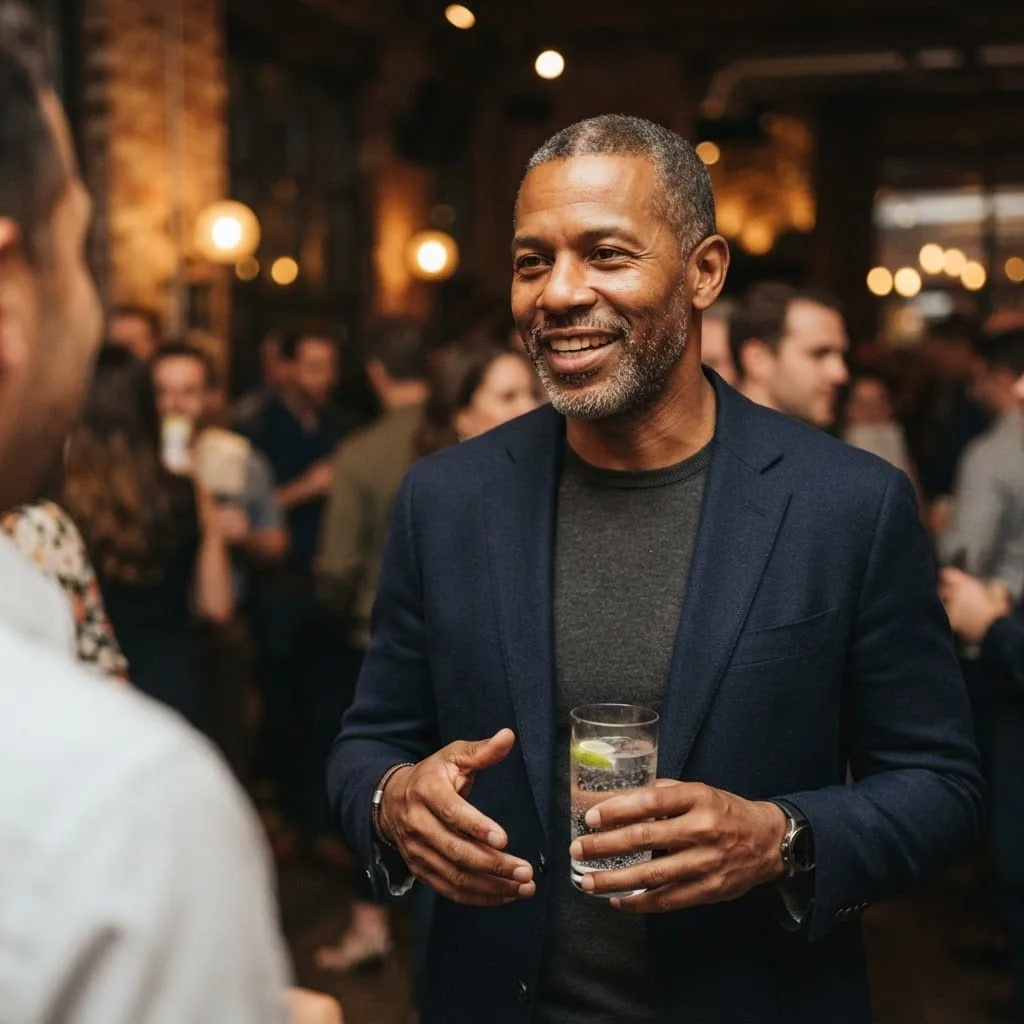
Last Friday I was at a World Cup watch party. USA vs. Paraguay. USA won. It was a co-sponsored event, open to families, the kind of evening where the room is a mix of clients, colleagues, and people you're meeting for the first time. I was holding a Diet Coke. Nobody asked why. What they noticed was the conversation.
I'm an ISTJ. If you've taken the Myers-Briggs, you know what that means in a room full of people. Structured. Reserved. Not the guy who gets louder as the night goes on. For years I believed alcohol was helping me in rooms like that. Smoothing the edges. Making the small talk easier. I retired from alcohol on April 16, 2025. Fourteen months later, standing at that watch party with a Diet Coke, I realized alcohol was never doing what I thought it was doing. It was doing the opposite.
Why introverts think they need alcohol at work events
The Myers-Briggs ISTJ profile is one of the most common in enterprise sales and executive leadership. Detail-oriented. Deliberate. Loyal. We tend to be excellent one-on-one and in structured settings. Large social events with no agenda are a different animal.
For years the conventional wisdom I absorbed was that a drink or two takes the edge off. Makes you more present. Easier to be around. That's not entirely wrong. Alcohol does suppress the nervous system. It does reduce social inhibition in the short term. But that's the trick. The short term is all you're seeing. What you're not seeing is what it's doing to the version of you who shows up the next morning, the next week, the next year.
What nobody tells you about confidence and alcohol
Confidence isn't something alcohol gives you. It's something alcohol borrows against. The first time you have a drink at a networking event and the conversation flows more easily, you don't think: I just borrowed from my future confidence. You think: that worked. So you do it again. And again. Over years, the loan compounds.
I spent six years in what I now call intentional mental preparation before I retired from alcohol on April 16, 2025. Part of what I was doing during those years was auditing what alcohol was actually doing versus what I thought it was doing. The answer was uncomfortable. The swagger I thought alcohol was giving me at client events? It was mine. It had always been mine. Alcohol was slowly making a withdrawal every time I used it as a social crutch.
By the time I retired, I wasn't starting from zero. I was reclaiming what was already there. That's a critical distinction. This isn't about building new confidence from scratch. It's about stopping the thing that was quietly draining it. The full mental preparation process is what the Prepared Sobriety framework is built around. Five stages from quietly thinking about it to a deliberate, dated retirement.
What the World Cup party actually taught me
Here's what I noticed at that watch party that I wouldn't have noticed two years ago. Nobody cared what was in my glass. Not one person. What they cared about was whether I was genuinely engaged with them. Whether I was curious about what they were saying. Whether the conversation felt real.
That's the whole social game at work events. Genuine presence. The drink was never the point. It was a prop. And I'd been using it as a crutch for so long I'd forgotten I didn't need it. The conversations I had that night were sharper than any I'd had at events when I was drinking. Because I was fully there. No background noise. No part of my brain managing the drink count or worrying about how I'd feel in the morning. Just the conversation.
How this translates to day-to-day performance
The watch party is one night. What matters more is what it represents every single day. I cold call anyone now. I mean that literally. A year ago I would have hesitated. I would have talked myself into or out of it. That hesitation had nothing to do with sales skills. It was confidence running on a deficit.
Since retiring from alcohol, that deficit is gone. The edge is back. Sharper calls. Sharper prep. Sharper read of the room in every client conversation. I call it the shark mentality. Not aggressive, just precise. Present. Unbothered by rejection. The mental fog I'd normalized over years, the slight dullness on Tuesday morning, the quarter-speed thinking on a Friday afternoon, wasn't just a hangover. It was the compound interest on a loan I'd been taking out for fifteen years.
14 lbs lost in four months. Two medications eliminated by February 2026. LDL down 29%. The performance gains aren't just mental.
What this means if you're a C-suite executive
If you're a CFO, a COO, a VP of Sales, or a CEO, you didn't get where you are by being average in rooms. You got there by being the sharpest person in the conversation. By reading people. By making decisions with clarity. At some point, maybe gradually enough that you didn't notice, alcohol started taxing that.
Not dramatically. That's the part that's easy to miss. It wasn't a crisis. It was a slow, compounding drain on the version of you that's exceptional. The version that walked into rooms and owned them. You've been performing at a high level in spite of it. Imagine what you perform like without it. That's not a hypothetical. That's a question you can answer. And it doesn't require a program, a label, or a rock bottom. It requires a decision and the right preparation before you make it.
Colin Casillas founded Prepared Sobriety to help high-earning professionals retire from alcohol on their own terms. He retired on April 16, 2025 after 30 years of regular drinking. His LDL dropped 29%, he lost 14 lbs, both within his first four months, and two medications were eliminated within his first ten months. If you're ready to make a deliberate exit, work with Colin directly.
Frequently asked questions
Can introverts handle work social events without alcohol?
Yes, and often better than they expect. The belief that alcohol helps introverts in social settings is widespread but inaccurate over time. Alcohol suppresses inhibition short-term but borrows from your baseline confidence over years. Most introverts who retire from alcohol report that genuine engagement, not chemical suppression, is what actually works in professional social settings.
Will people notice if I'm not drinking at work events?
Almost never, and far less than you expect. Most professionals are focused on their own conversations and their own glass. What people notice is whether you're present and engaged. A Diet Coke with real attention beats a cocktail with a distracted mind every time.
Does retiring from alcohol hurt your performance in sales?
The opposite is typically true. Sales performance depends on presence, clarity, confidence, and read of the room. All four improve after retiring from alcohol. The short-term social lubrication alcohol provides comes at the cost of the compound mental clarity that separates good salespeople from elite ones.
How do you handle the “why aren't you drinking” question at work events?
Most people never ask. When they do, a simple “I'm good with this” while holding your drink is sufficient. You don't owe anyone an explanation. The professionals who retire from alcohol and worry most about this question almost always report that the question came up far less than they feared.
Can a C-suite executive retire from alcohol without it affecting their career or relationships?
Yes. The concern is understandable but consistently unfounded. Executive careers run on clarity, judgment, and sustained energy. All three improve after retiring from alcohol. Social relationships shift slightly as the shared ritual of drinking changes, but the depth of those relationships typically improves because your presence in them improves.
How do you handle work events and client dinners without drinking?
Hold a real drink, not water, and stop treating your glass as the point of the evening. What clients and colleagues actually respond to is genuine attention, not what's in your hand. Nobody at a client dinner is tracking your glass; they're tracking whether you're actually listening to them.