
Fatty Liver From Alcohol Has Quiet Symptoms. Here's What Mine Felt Like.
By Colin Casillas, Founder of Prepared Sobriety
My diet didn't change. I kept working out.
The scale kept climbing anyway. I was at 230 pounds.
I was tired most days. My abdomen felt full, especially on the upper right side.
I had an explanation for all of it. Any explanation except the alcohol.
Then my labs came back. My doctor told me I had fatty liver. My total cholesterol was 285. My LDL was 212. My inflammation marker was one tenth below the high-risk line.
I can't say how much of what I felt was my liver and how much was inflammation in general. It was all happening at once.
What does fatty liver from alcohol feel like?
For a lot of people, nothing.
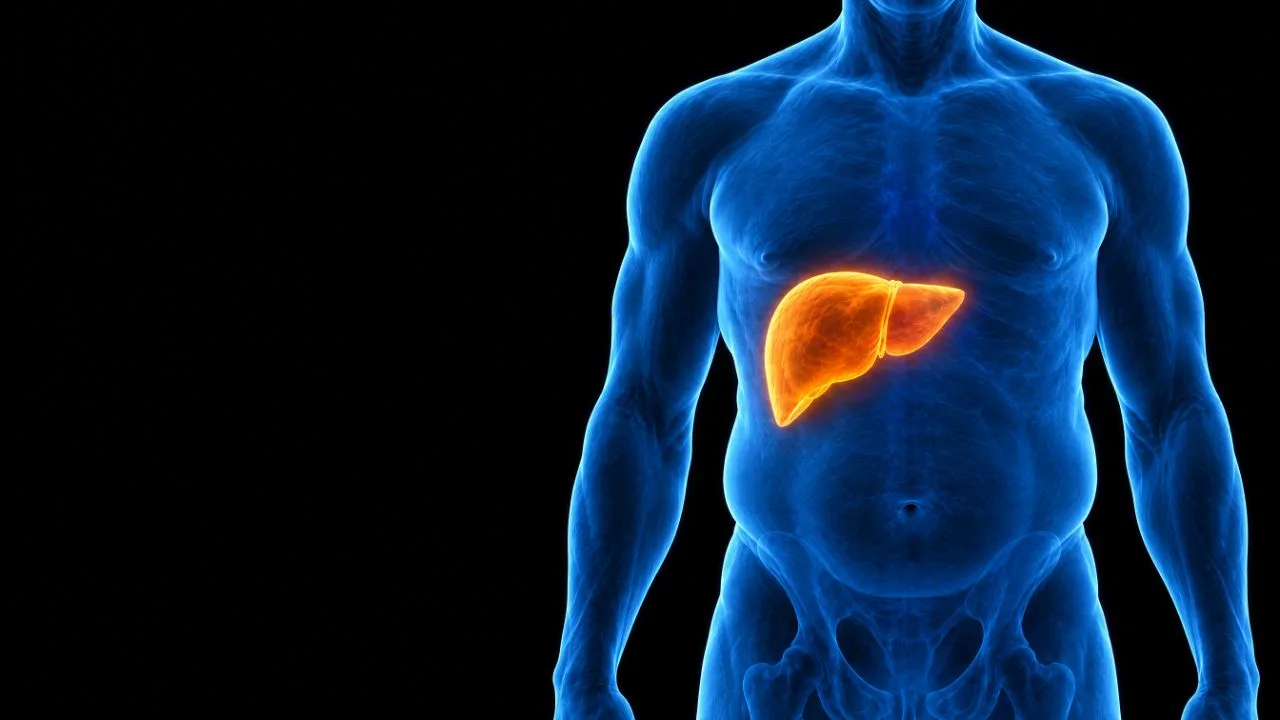
When an early sign shows up, Cleveland Clinic says it's usually tiredness. Some people also feel fullness or discomfort in the upper right side of the belly. That's where your liver sits.
Both are easy to explain away. Tired gets blamed on a long week. Full gets blamed on a big dinner.
Kaiser Permanente researchers estimate close to 1 in 3 US adults have some form of fatty liver disease. Less than 1% of them may know it.
Think of a check engine light that flickers instead of staying on. The car still runs. You keep driving.
High performers make this worse. We read our health by our output. The deadline got hit. The presentation landed. If the output holds, we assume the engine is fine.
Early fatty liver doesn't touch the output. That's why it gets years to build.
Why does drinking put fat in your liver?
Your liver treats alcohol as a toxin. It deals with it first.
Picture a calendar where one meeting always takes priority. Everything else gets bumped. In your liver, the job that gets bumped is processing fat. So the fat stays and builds up.
That finally explained my scale. Same food. Same workouts. My liver was busy with something else.
Cleveland Clinic says most people with alcohol-related liver disease develop it after five to 10 years of heavy drinking. I drank regularly for 30 years.
What happens if fatty liver keeps going?
It moves in steps.
1. Fat builds up in the liver. Symptoms are mild or missing. Usually reversible.
2. The fat triggers inflammation. Liver cells start getting damaged.
3. Scar tissue forms. NIAAA says this happens in 20% to 40% of long-term heavy drinkers.
4. Cirrhosis. Heavy scarring that usually can't be undone. It develops in 8% to 20% of chronic heavy drinkers.
I was caught on the first step.
The later steps can be quiet too. Mayo Clinic says cirrhosis "often has no symptoms until liver damage is serious."
The liver isn't the only thing at stake either.
The NIH says heart disease is the most common cause of death in people with fatty liver disease.
My cholesterol was already high. The two problems were stacking.
Can fatty liver from alcohol be reversed?
In the early stage, yes.
Cleveland Clinic says the fat buildup "may stop in as little as six weeks" after you stop drinking. That gives the inflammation and scarring a chance to stop too.
My doctor rechecked my liver after I retired from alcohol. My liver markers are healthy now.
Here's what else changed after April 16, 2025. My baseline labs were drawn in December 2024 and my follow-up in August 2025.
- I lost 14 pounds in the first four months. I'm at 207 now, down from 230.
- Total cholesterol went from 285 to 202. LDL went from 212 to 142.
- hs-CRP, the inflammation marker, went from 2.9 to 1.6.
- By August 2026, my A1c was 5.6, down from 5.8. Fasting glucose went from 100 to 87.
- Two medications were gone within ten months.
These are my results. Yours may look different. I wrote up the full panel in what happens to your blood when you retire from alcohol.
What should you do if this sounds familiar?
Start with your doctor.
1. Ask about your liver at your next physical. Ask what your labs show about your liver and whether anything else is worth checking. Mention any tiredness or fullness on your right side, even if it seems minor.
2. Tell your doctor how much you actually drink. The real number, not the dinner-party number. Your doctor can't connect what they can't see.
3. Watch the trend. Weight that climbs while your food and workouts stay the same is telling you something. So is a cholesterol number that keeps creeping up.
This is what I call Compounding Friction, the third stage of the five-stage framework. The physical costs pile up, and you keep finding reasons it isn't the alcohol. You can find your stage in about two minutes.
If you'd like to talk through where you are, the first call is complimentary. Here's how coaching works.
Fatty liver is quiet. You find it when someone looks.
When's the last time someone looked at yours?
Frequently asked questions
What does fatty liver from alcohol feel like?
Often nothing at all. When early signs show up, Cleveland Clinic says tiredness is the most common one. Some people also feel fullness or discomfort in the upper right side of the belly, where the liver sits. Colin Casillas had both. Many people only learn they have it when a doctor looks at their labs or orders imaging.
How common is fatty liver in people who drink?
Cleveland Clinic says about 90% of heavy drinkers develop fatty liver, the earliest stage of alcohol-related liver disease. For men, heavy drinking means three or more drinks a day or 21 or more a week. Most people who develop alcohol-related liver disease do so after five to 10 years of heavy drinking.
Can fatty liver from alcohol be reversed?
In the early stage, yes. Cleveland Clinic says the fat buildup may stop in as little as six weeks after you stop drinking, which gives inflammation and scarring a chance to stop too. Later stages like cirrhosis usually can't be reversed. Colin's doctor found fatty liver before he retired from alcohol, and his liver markers are healthy now. Talk to your doctor about your own case.
Why do you gain weight from drinking even if your diet stays the same?
Your liver treats alcohol as a toxin and handles it first. While it does, its other jobs, including processing fat, get pushed aside, so fat builds up. Colin Casillas kept his diet and exercise the same and still reached 230 pounds. He lost 14 pounds in his first four months after retiring from alcohol and is at 207 today.
What are the stages of alcohol-related liver disease?
It starts with fat building up in the liver, which is usually quiet and reversible. Next the fat triggers inflammation and damage. Then scar tissue forms, which NIAAA says happens in 20% to 40% of long-term heavy drinkers. The last stage is cirrhosis, heavy scarring that usually can't be reversed, which develops in 8% to 20% of chronic heavy drinkers.